The average American EV owner charges at home 80% of the time. The outlet you plug into matters enormously for how useful your car is day to day. A standard 120-volt Level 1 outlet adds only 3–5 miles of range per hour of charging — meaning a car with 250 miles of range takes 50+ hours to fully charge from empty. A Level 2 charger on a 240-volt dedicated circuit adds 20–30 miles per hour, fully charging most EVs overnight. The decision to install a Level 2 charger at home is usually straightforward once you understand the costs and the incentives available. Between the IRA federal tax credit, utility rebates, and the falling cost of EVSE units, a Level 2 install is now accessible to most homeowners at a net cost well under $1,000 in many markets. This guide walks through everything: charger selection, electrical requirements, installation costs, and every credit you can stack.
Level 1 vs Level 2: Which Do You Actually Need?
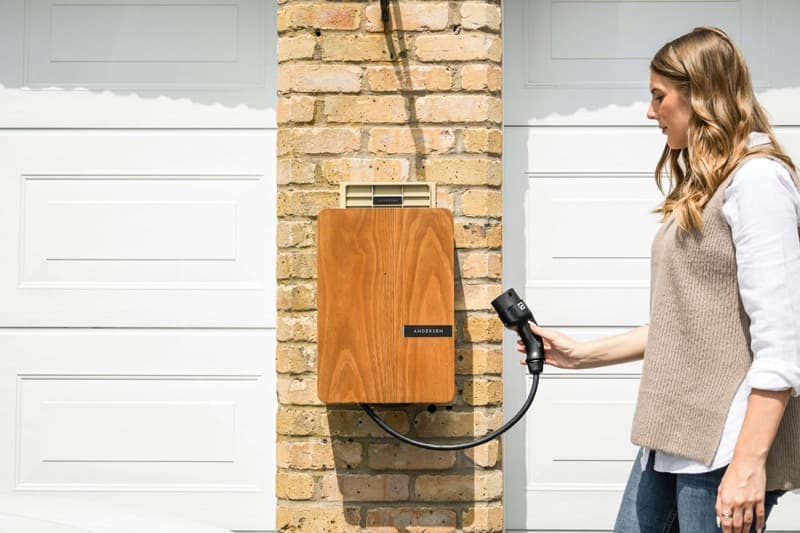
Level 1 charging uses a standard 120-volt, 15-amp household outlet. Your EV almost certainly came with a Level 1 EVSE (Electric Vehicle Supply Equipment) unit in the box. It is essentially a glorified extension cord with safety electronics. Level 1 is sufficient for plug-in hybrid vehicles (PHEVs) with 20–50 miles of electric range, or for full EVs driven fewer than 30 miles per day who have all night to charge. Level 2 charging uses 240-volt power, the same voltage as an electric dryer or range. It requires a dedicated circuit with a 50-amp breaker (for most chargers) installed by a licensed electrician. The EVSE unit can be either hardwired directly or plug into a NEMA 14-50 outlet. Level 2 adds 20–30 miles of range per hour — a 250-mile EV battery goes from empty to full in 8–12 hours. For most full EV owners with real-world driving patterns of 40–80 miles per day, Level 2 installed in the garage is the right choice. Level 3 DC fast charging (the kind at commercial charging stations) is not available for home installation — the equipment requires three-phase power and costs tens of thousands of dollars.
Selecting a Home EV Charger
The EVSE market has matured significantly. The most popular home chargers in 2026 are the ChargePoint Home Flex ($650–$750), the Grizzl-E Classic ($299–$399), the Emporia Smart EV Charger ($350–$450), and the JuiceBox 40 ($550–$700). All of these are UL-listed, compatible with all EVs using the J1772 connector (CCS for DC fast charging), and include smart features for scheduling charging during off-peak hours to save on electricity costs. Tesla owners should note that the standard J1772 connector works with Tesla vehicles via the included adapter, and the Tesla Wall Connector ($595 plus installation) is also a popular choice for Tesla households. Key specs to consider: amperage (32A, 40A, or 48A — higher amperage means faster charging), WiFi connectivity (for scheduling and monitoring), cable length (20–25 feet recommended for flexibility), and NEMA 3R weather rating for outdoor/garage installation. Do not buy the cheapest no-name charger you find online — UL listing is the minimum safety standard to look for.
Electrical Requirements and Panel Capacity
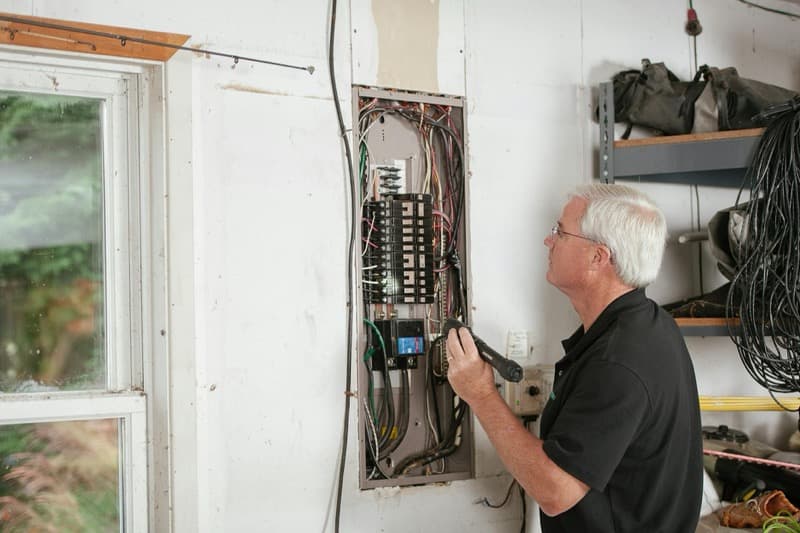
Most Level 2 chargers run on a dedicated 240-volt circuit with a 50-amp breaker, requiring 6-gauge wire (or 4-gauge for runs over 50 feet). The circuit must be dedicated to the charger — no shared circuits. This is where the panel comes in. A 200-amp panel with open slots can typically accommodate a 50-amp EV charger circuit without any upgrades, as long as the total connected load does not exceed 80% of panel capacity (NEC 220.87 allows load calculations based on actual demand). However, homes with 100-amp service panels, or 200-amp panels that are nearly full, may need a panel upgrade or sub-panel installation before the charger can be added. The electrician will calculate your existing load versus available capacity. Options when capacity is tight: a load management device ($500–$800) that dynamically limits charger power based on real-time home energy use, a sub-panel addition ($800–$2,000), or a full panel upgrade ($1,500–$4,000). Always ask your electrician to provide a panel load calculation with their quote — you want to understand the full project scope before work begins.
Installation Cost Breakdown
- EVSE unit (Level 2 charger): $300–$800 depending on brand and features
- Electrician labor (4–8 hours): $400–$1,200 depending on market
- 50-amp dedicated circuit materials (wire, breaker, conduit): $150–$400
- NEMA 14-50 outlet installation (if not hardwiring): $100–$200
- Permit fee: $75–$200 depending on jurisdiction
- Total without panel upgrade: $600–$2,500 all-in
- Total with panel upgrade: $2,500–$6,500 depending on market
IRA Section 30C Tax Credit: How to Claim It
The Inflation Reduction Act provides a 30% federal tax credit under IRS Section 30C for EV charger installation at a primary residence, up to $1,000 for homeowners (the limit was previously $1,000 per unit; as of 2023 it is $1,000 per taxpayer per year for residential installations). To qualify: the charger must be installed at your primary residence in the US. Commercial chargers qualify for a separate credit. The charger must be a bi-directional charger or a Level 2 EVSE. File IRS Form 8911 with your annual tax return in the year the charger was installed. This is a non-refundable credit — it reduces your federal tax liability but will not generate a refund check if your liability is below the credit amount. If you are also doing a panel upgrade as part of the charger installation, the panel upgrade component may qualify for the Section 25C credit (up to $600) as an electrical panel upgrade connected to a qualifying energy improvement. That means a $1,500 charger installation plus $2,500 panel upgrade could yield up to $1,600 in federal credits ($1,000 + $600).
Utility Rebate Examples (2026): Austin Energy (Texas) offers up to $1,500 for residential EV charger installation. LADWP (Los Angeles) offers up to $500. Xcel Energy (CO/MN) offers up to $500. PG&E (Northern California) offers up to $250. Duke Energy (NC/SC/IN) offers up to $500. Check your utility's website before installation — most require pre-approval and a qualified installer. Stacking the IRA credit plus your utility rebate on a $1,200 installation can bring your out-of-pocket cost close to zero.
The Installation Process: What to Expect
A straightforward Level 2 charger installation with a nearby panel and available capacity takes 2–4 hours. The electrician runs a new 240-volt circuit from your panel to the charger location (usually a garage wall), installs a 50-amp breaker, runs conduit or wire through walls and framing, and mounts the EVSE unit. A permit is required in most jurisdictions — the electrician pulls the permit, schedules the inspection, and typically handles the city inspector's visit. If there is conduit to run through finished walls, drywall cutting and patching may be needed (usually minimal). Ask upfront where the electrician plans to run the circuit — the route affects both labor time and whether any drywall repair is involved. After installation, the electrician will test the circuit and walk you through the charger's setup and app pairing. Most smart chargers have apps that let you schedule charging for off-peak hours, monitor energy usage, and set charging targets.